


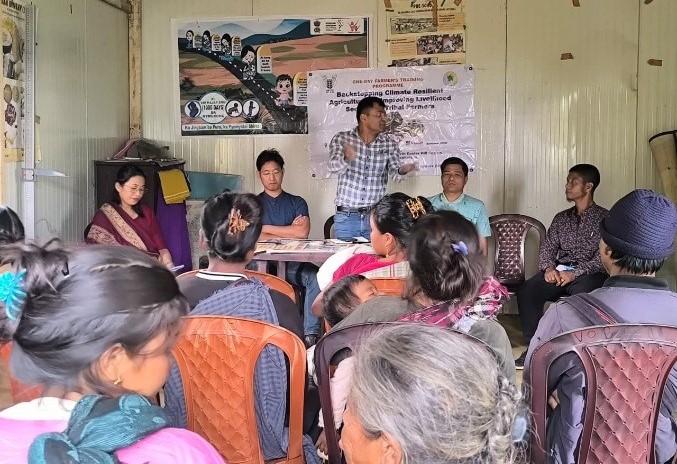
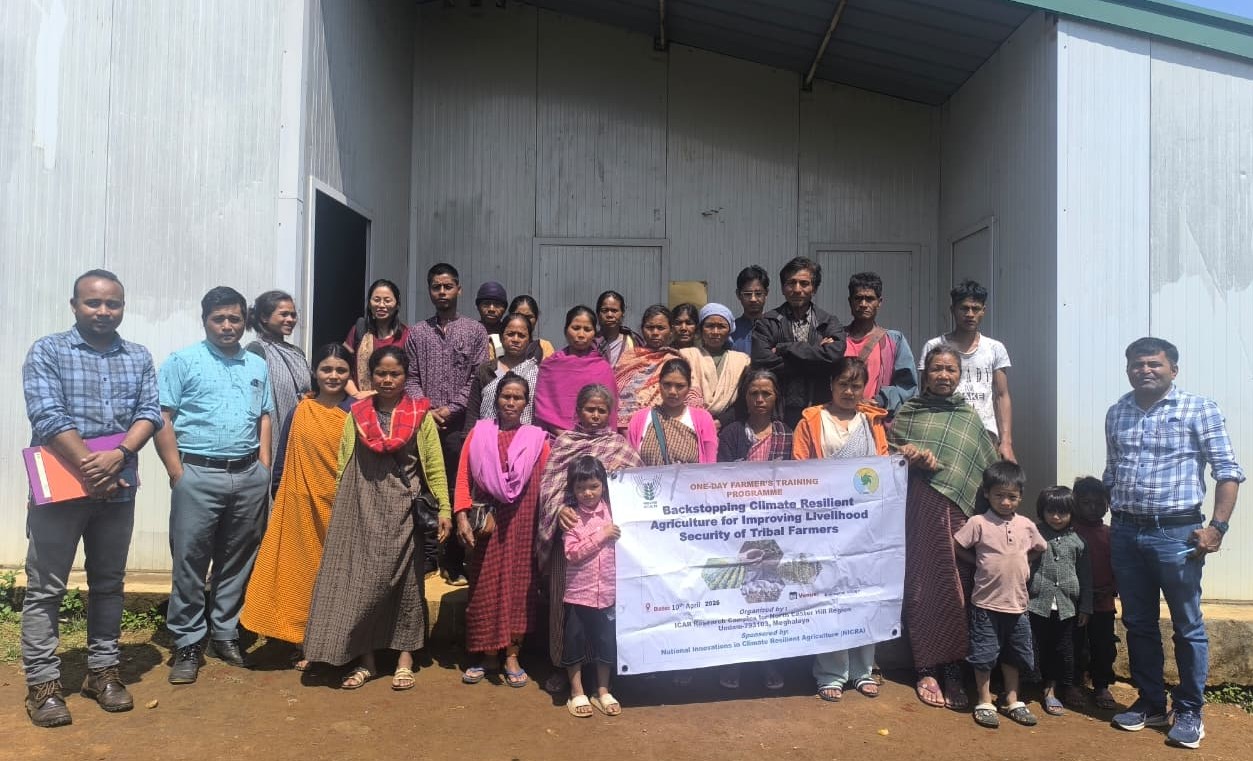
Under the ongoing NICRA project, one visit was carried out by the concerned climate
change research scientists and project fellows on 10th April 2026 to one of the villages falling under a highly vulnerable and socio
economically backward block and district of Meghalaya, namely Bamkamar village in Thadlaskein Block of West Jaintia Hills district.
Designated team of Scientists encompasses the Principal Investigator (PI) of the project, Dr. Krishnappa R., along with the senior subject
experts and Co-PIs, Dr. N. Uttam Singh and Dr. Heiplanmi Rymbai, were actively visited and interacted with the gathered farmer community with
the enthusiastic involvement of project staff, namely Dr. Nivetina Laitonjam (RA), Dr. Rajesh Khan (YP-II), and Mr.Shaniah Sumer (YP-I). The clear
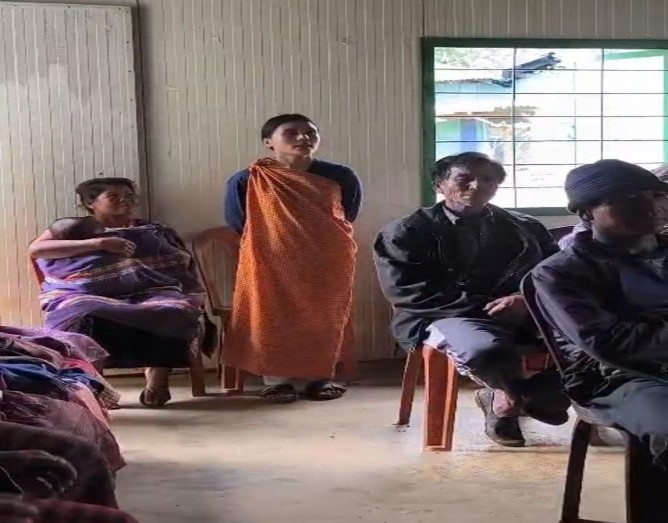
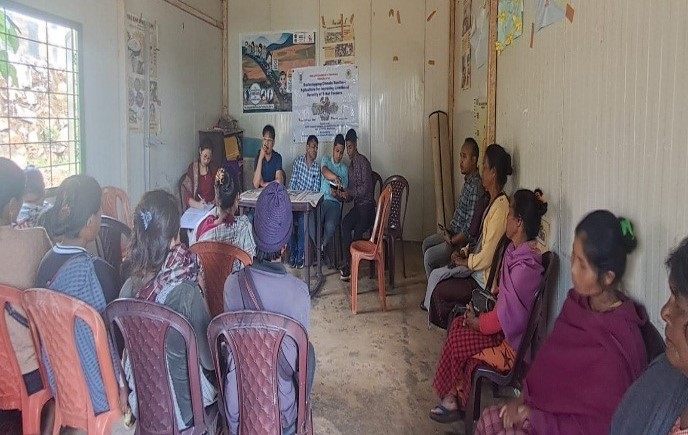
purpose of the visit was to assess the village location, observe the condition of farmlands, and interact with groups of tribal farmers to gather
baseline information on the village profile, indigenous agricultural practices, existing infrastructure facilities, and resource base with emerging
climate change–related challenges.
The village is pretty distantly situated at a distance of 43.0 km from ICAR institute,
Umiam (59.4 km from the state capital Shillong, 32.8 km from the district headquarters Jowai) with travel time of 1.15 hour. The terrain
of said village predominantly hilly and rugged with a total population of 1,580 (consisting of 781 males and 799 females) distributed across
268 households. Among these, a large proportion of households, numbering 194 (72.39%), fall below the poverty line, indicating a considerable
level of economic vulnerability. Agriculture forms the primary source of livelihood in the village, with around 600 farmers and 257 (95.90%)
households actively engaged in farming activities. The total cultivable land area is about 1,000 hectares, of which only 250 hectares are under
net sown area, and a mere 50 hectares have access to irrigation facilities, highlighting the limited irrigation infrastructure in the village.
Community organization is evident to some extent, as 130 (48.51%) households have been mobilized into Self-Help Groups.
The cropping pattern of the village is diverse, with major crops including
potato, turmeric, tomato, broom grass, chilli, ginger, paddy, maize, and common vegetables such as cabbage, cauliflower, peas,
and beans. Broom cultivation is a distinctive feature of the village, as almost every household is engaged and upon which the
villager are very proud of for making significant contributor to household income. The majority of farmers practice organic farming,
primarily using cow dung as key input for soil enrichment. However, the adoption of improved organic practices such as vermin-composting,
biochar, rock phosphate, liming, bio-stimulants utilisation being limited underlining the immense potential for its introduction and promotion.
Although, livestock rearing is practiced on a small scale, with poultry and piggery being the most common activities and while fish farming is
undertaken by only a few households, there is remarkable scope for climate resilient live stock practices on community involvement. The productivity
of livestock remains low due to the lack of improved breeds. Over the past two decades, villagers have perceived noticeable changes in climatic conditions,
particularly a notable reduction and delay in rainfall, which has adversely affected cropping patterns and agricultural productivity. There is also a general
perception of increasing temperature in the area. In addition, the village has experienced natural hazards such as landslides and hailstorms, further affecting agricultural stability.
Farmers in the village face several challenges that constrain agricultural
development and livelihood improvement. The lack of sufficient rainfall coupled with inadequate irrigation facilities is a
major concern. Even though village is well connected two major rural markets, market-related issues are also much perceptible,
as farmers often receive very low prices for their produce during periods of surplus production; for instance, the price of brinjal
dropped to as low as Rs 4 per kilogram during glut periods of 2025. Furthermore, there is a lack of access to good quality seeds of
climate resilient crops and improved livestock breeds, along with limited exposure to modern agricultural technologies.
Despite these challenges, the village holds considerable potential for
agricultural development. Interventions such as the construction of water harvesting structures like Jalkunds, provision
of solar cum diesel water pumps to expand irrigation coverage, and supply of high-quality seeds and planting materials of
agriculture and horticultural crops could significantly enhance productivity. The introduction of fruit crops such as guava
and mandarin, along with the establishment of improved manuring technologies vermin-composting units and biomass recycling
through biochar production, can further strengthen sustainable farming practices. Additionally, the setting up of Custom Hiring
Centres and promoting doable agro-forestry interventions aligning with vast slopy lands of the village would improve access to
improved farm machinery, while the promoting the improved livestock breeds could enhance income from allied activities.
In conclusion, said Bamkamar village demonstrates a strong eagerness for improved,
resilient and sustainable agricultural practices for combating apparent climate change, particularly in alignment with widespread
adoption of organic cultivation practices and broom grass production. However, addressing key issues related to water scarcity,
increased burden of climate variability, enhanced market access, and urgent steps to reduce the technological gaps is essential
for improving productivity and ensuring livelihood security of resource poor and socio-economically vulnerable village. With
appropriate & customised technological interventions and institutional support, the active farmers of village has the boundless
potential to achieve sustainable agricultural development with enhanced climate resilience
 |
 |
 |
 |