

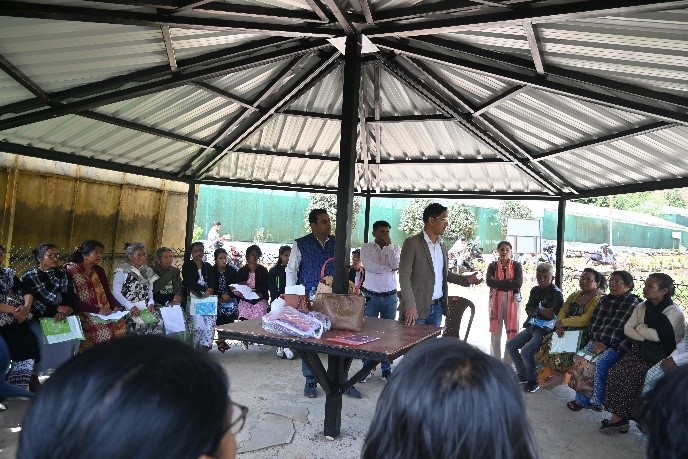
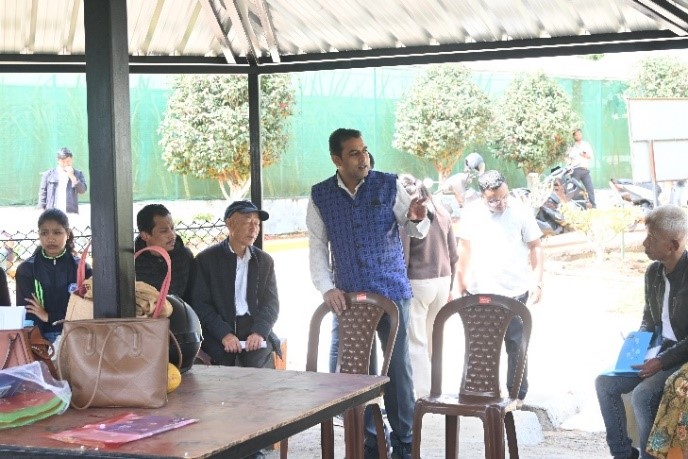
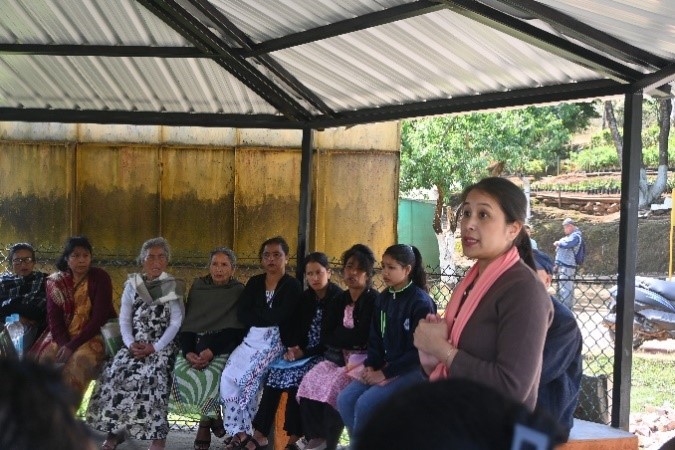
One daylong need based adhoc farmers’ training programme on “Backstopping Climate-Resilient Agriculture for Improving Livelihood Security of Tribal Farmers” was organized
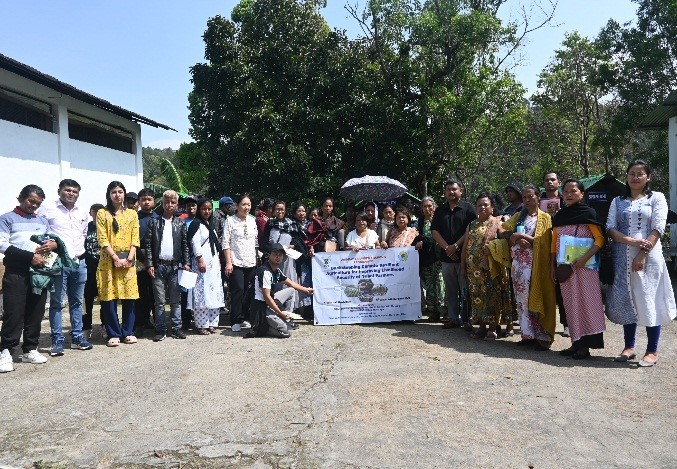
on 19th March 2026 at institute farm premises of ICAR Research Complex of NEH Region under the NICRA (National Innovations on Climate Resilient Agriculture) project. Around forty number of farmers (including 24 women and 16 men)
hailed from Lawsohtun village of Mylliem Block, East Khasi Hills District (which was selected based on earlier climate vulnerability studies and PRA (Participatory Rural Appraisal) undertaken by concerned scientists under NICRA) have
actively participated in the training. The programme was aimed to create awareness about climate-smart agricultural interventions developed and optimized under the project to address persistent and shortlisted stifling climatic stress challenges
as faced by tribal farming community of village over period of time like poor soil fertility, lower cropping intensity, water scarcity, lesser infrastructure for modern farming and lesser penetration of government schemes & social insecurities. The
programme commenced at the Horticulture Field with registration and inaugural remarks by Dr. N. Uttam Singh, Senior Scientist (Agricultural Statistics), DTAC and Dr. Krishnappa R., Principal Investigator, NICRA, Division of Crop Science underscoring the
importance of adoption of scientifically validated, location-specific climate-resilient technologies for sustaining farm productivity and livelihood security under changing climate and its vulnerabilities. Firstly the scientific awareness on climate-resilient
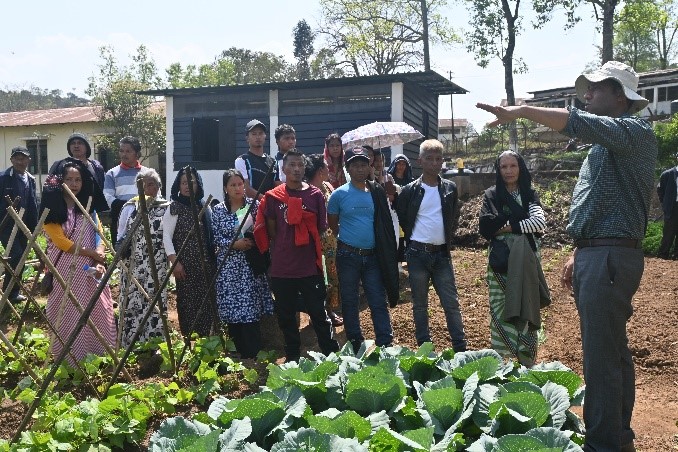
horticultural practices, viz., hi-tech horticultural farming techniques including hydroponics and protective cultivation practices for vegetable production and grafting techniques in fruit crops was conducted by Dr. Veerendra Kumar Verma, Senior Scientist (Horticulture),
Dr. M. Bilashini Devi, Senior Scientist (Horticulture), DSRE and Dr. Heiplanmi Rymbai, Senior Scientist (Horticulture), DSRE respectively. They enlightened about immense scope of horticulture with practical strategies for improving crop productivity through protected structures,
efficient input use and diversification. At the Lowland Agronomy Field, Dr. Badapmain Makdoh, Senior Scientist (Agronomy), DSRE have demonstarted the climate-resilient organic farming and Integrated Organic Farming Systems (IOFS) practices covering the aspects like sustainable nutrient
management, system diversification, and integration of farm enterprises to enhance soil health, input efficiency, and farm income stability under erratic weather conditions.
In Animal Science Farm, Dr. K. Puro, Principal Scientist (Animal Health), DAFS, and Dr. Sourabh Deori, Senior Scientist (Livestock), DAFS, have elaborated and showcased practices related
to climate-resilient livestock rearing, emphasizing improved health care, scientific feeding, and shelter management suited to hill ecosystems. Farmers were encouraged to adopt livestock-based integrated farming approaches for strengthening
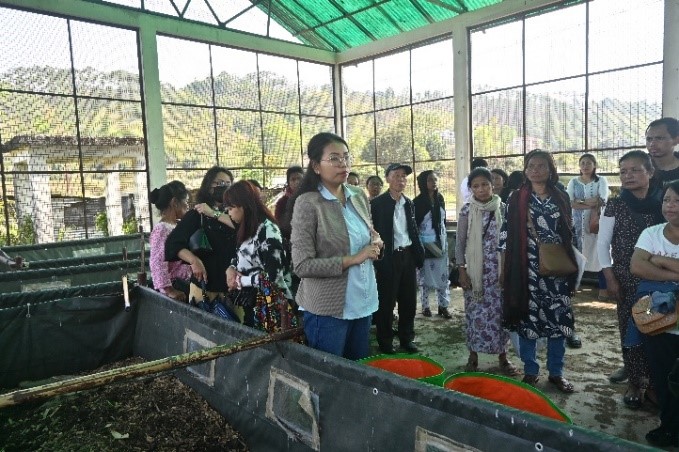
nutritional and economic security. A field demonstration on vermi-composting and overall soil health management was conducted by Dr. Loitongbam Joymati Chanu, Scientist (Soil Science), DSRE Dr. Ramesh T., Principal Scientist and Head, DSRE;
and Dr. Prabha M., Scientist (Environmental Science), DSRE. The scientists emphasised the urgent need for soil testing of village and also relevence of organic waste recycling, soil fertility restoration, and soil organic carbon management for
managing degraded soils.
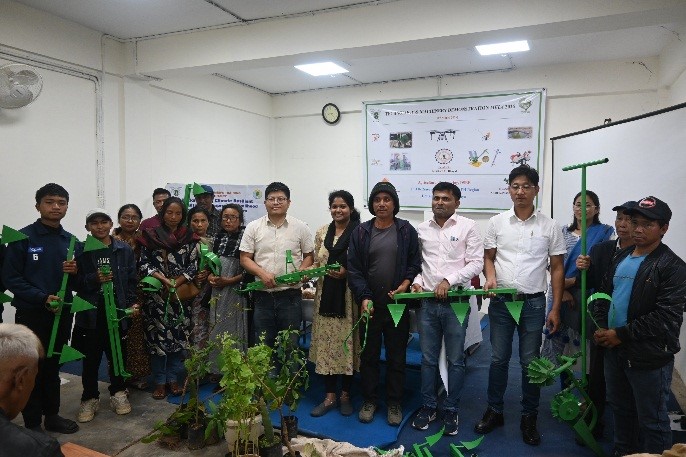
Post-lunch sessions conducted at the Agricultural Engineering Section featured on farm demonstrations related tools and techniques of farm mechanization and agricultural engineering by
Dr. Hijam Jiten Singh, Scientist (Agricultural Engineering), DSRE and technical staff viz., Mr Aftab Hussain, who showcased region-specific implements designed to reduce drudgery and improve operational efficiency in hill agriculture.
Dr. Krishnappa R., Principal Investigator, NICRA, further demonstrated biochar production and its relevance in improving soil carbon sequestration, moisture retention, and long-term soil productivity in slopy soils. The programme has
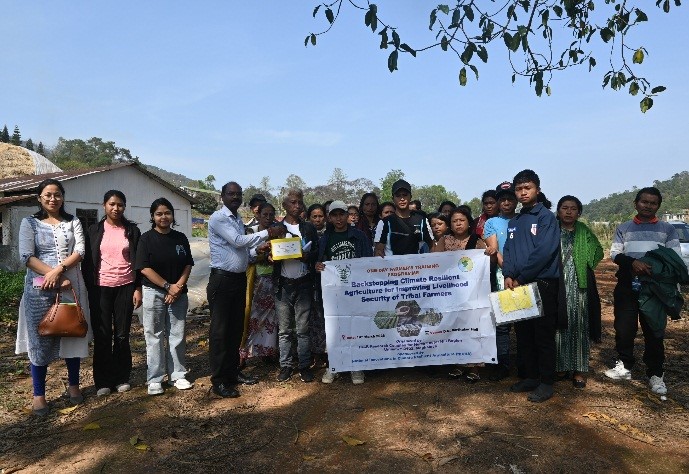
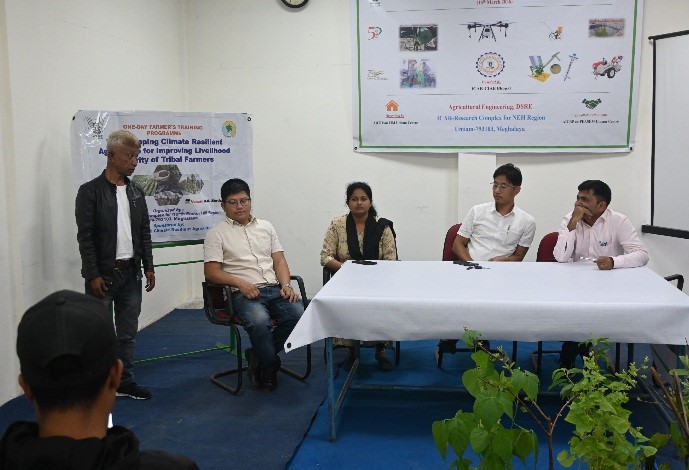
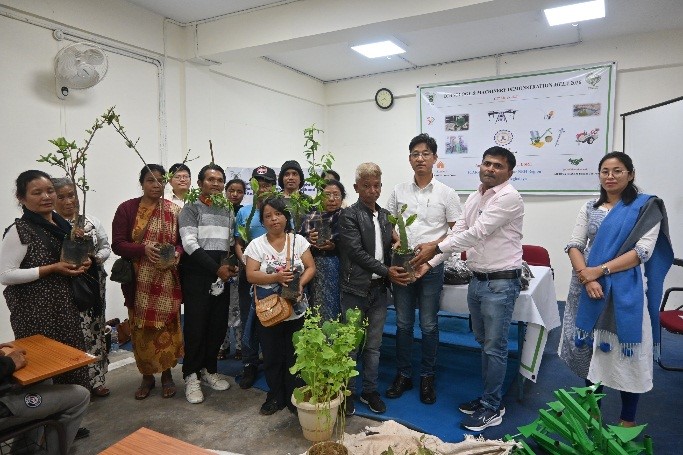
concluded with an input distribution and valedictory session as graced by Dr. N. Uttam Singh; Dr. Krishnappa R.; Dr. Hijam Jiten Singh; and Dr. Nivedita S., along with a farmer representative viz., Mr. Lumbok Marbaniang. The dignitaries
underscored the importance of sustained farmer–scientist linkages and interaction, capacity building, and on-farm adoption of climate-smart technologies for building resilient hill agricultural systems in the village. The training programme
served the major purpose of exposing the selected farmers on relevent climate resilient technologies and their skill enhancement including horticulture, organic farming, livestock management, soil health and, mechanization . Farmers expressed
regards and appreciation for the field-oriented demonstrations and conveyed their readiness to implement the showcased technologies in their farms. Through such multi-disciplinary initiatives, ICAR continues to strengthen its commitment to promoting
climate resilience, sustainable agricultural intensification, and livelihood security among tribal farming communities in the North Eastern Hill region.
The training programme was successfully organized with the active involvement of Dr. N. Uttam Singh, Sr. Scientist (DTAC), Dr. Krishnappa R., PI (NICRA), Dr. Hijam Jiten Singh, Scientist (DSRE),
Dr. Badapmain Makdoh, Sr. Scientist (DSRE); Dr. M. Bilashini Devi, Sr. Scientist (DSRE), Dr. Loitongbam Joymati Chanu, Scientist (DSRE), Dr. Ramesh T. PS and Head (DSRE), Dr. Prabha M., Scientist (DSRE), Dr. K. Puro – PS (DAFS), Dr. Sourabh Deori, Sr. Scientist (DAFS),
Dr. Heiplanmi Rymbai, Sr. Scientist (DSRE), Dr. Pankaj Baiswar, PS and Head (DCS), Dr. Letngam Thouthong, Scientist (DCS), Dr. Amit Kumar, Senior Scientist (DCS), Dr. S. Gojendro Singh, Scientist (DAFS), Dr. Nivedita S. Scientist, (DCS). The project staff namely Dr. Nivetina Laitonjam,
RA (NICRA), Dr. Rajesh Khan, YP-II (NICRA) and Ms. Lana Fica Bareh, YP-II (NICRA), Mr. Ricky Banskhem Marbaniang, YPI (NICRA) and Mr Victorio Tariang, Skilled staff of Plant Physiology Section have undertaken active participation for smooth conduct of the programme. The full training
programme was sponsored under the NICRA Project.
 |
 |
 |
 |
 |
 |
 |
 |
 |
 |